An article series offering advice and answering project-related questions.
 Industry Spotlight
A series of video conversations with Project and Program profesionals.
Opining Unpopularly
An article series by seasoned professionals on Project and Program topics approachably presented for a general audience.

Dear Diæreses…
Today I want to share some advice that came out of a recent conversation I had regarding project methodologies and debating the merits of one versus another (for example, a linear versus iterative structure, or something specific like using SAFe, Six Sigma, etc). When speaking with Hiring Managers, Recruiters, and organization leaders, this question about which project management methodologies I use comes up in nearly every single discussion.
Earlier in my career, I would make a point to champion a particular methodology or toolset, often leaning towards whichever flavor seemed to be the one I’d guess best suited their environment. Later, as I became more experienced, my response was to assure them that I can work with whatever system is already in place, primarily as a hedge against getting into a philosophical debate with anyone who might be an ardent proponent of a single, particular way of doing things (which has happened, and is a fast way to get me to choose not to take a gig).
I’ve reached a point in my career now that when I have these kinds of discussions, I feel confident in being sincere and sharing what many find to be an uncomfortable truth: The specific methodology doesn’t really matter. If you put people first and remain flexible, you can successfully execute and deliver even at large scale in very complex environments. I would go so far as to say that the larger and more complicated an initiative is, the more imperative it is to step away from a singular “methodology mindset” and instead be flexible and meet people where they are at.
For example, the most complicated effort I have ever driven involved integrating two entirely different organizations within a giant corporation… the cultures and political divides alone were significant, let alone the challenges in aligning timelines, delivery priorities, technologies that could understand each other, staffing, etc. While working within a framework was absolutely necessary for tracking and reporting on the work itself, the project methodology chosen was far less important than just making connections and working as a partner and collaborator. Starting with people first makes all the difference, especially in an environment where no one single methodology is going to serve all teams equally well.
When I answer this question today, I respond that the methodology isn’t what drives success, it’s the leadership values that do. At Hulu, we had a set of core values that we took to heart. Among them was We Are One Team, which was integrated into our culture so much that to this day I still use #oneteam in my communications, especially when addressing large and/or disparate groups on projects. Success comes from leading with values and recognizing the project framework you choose to work within is merely a tool.
Not to dodge the question entirely, there does indeed come a point where I do decide how best to structure my project, taking into account the scale and scope of the work and the variety of groups I will need to coordinate. Even here, my choice is to remain flexible and not let myself get bogged down by process and protocol. The more groups I have to coordinate, the more likely I will be working with a blended system to allow different teams to work within a framework that fits each group's individual needs. I also want to remain flexible so that I can more easily pivot to a different approach if need be.
I often joke that a good Project Manager should be able to deliver successfully using nothing more than their smile, a handshake, a crayon and napkin, and occasionally a bottle of bourbon (the latter acting equally well as an apology, a thank you, or a bribe). Despite the joking nature of this comment, starting with people first and leading with values instead of process set you on a path to doing just this.
For those of you early in your Project/Program career, my advice is to indeed spend time to learn different methodologies and the philosophies behind them. The more you know, the more you will be able to flex when needed. The core advice here is not to get wrapped up in any one method as rigidly being “the way” to get things done. Connect with people, and avoid getting hung up on process.
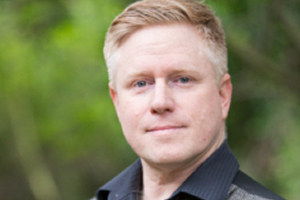
Dærick Gröss is a project leader with a career spanning three decades across traditional, creative, and technical environments. He has worked for art and publishing houses, telephony services, marketing/SEM agencies, online player management platforms, content streaming services, AdTech companies, and B2B/B2C consumer/provider platforms.
Dærick shares from his unique background and perspective stories and advice on project management and delivery in an approachable style intended for new Project/Program professionals and organizational leaders seeking to build out a successful Project domain in their work environment.